





Farming simulation RPGs traditionally center on land ownership, productivity scaling, and economic optimization. Coral Island adopts this foundation but overlays it with a more ambitious objective: ecological restoration. Unlike cosmetic environmental themes that sit adjacent to gameplay, Coral Island embeds sustainability directly into its progression systems. Cleaning the ocean, reviving coral reefs, and reducing pollution are not optional side tasks; they are structural milestones.
This article examines how Coral Island integrates environmental recovery into farming, social systems, and economic loops. Rather than positioning sustainability as background narrative flavor, the game makes ecological repair a prerequisite for advancement, aligning mechanical reward with environmental responsibility.
1. Arrival in a Community Facing Ecological Decline
The island is introduced as vibrant but damaged.
Pollution affects the ocean floor. Coral reefs are dormant. Industrial influence looms in the background.
From the outset, the player understands that farming success alone is insufficient. Restoration is framed as communal survival, not personal enrichment.
2. Ocean Cleanup as Progression Gate
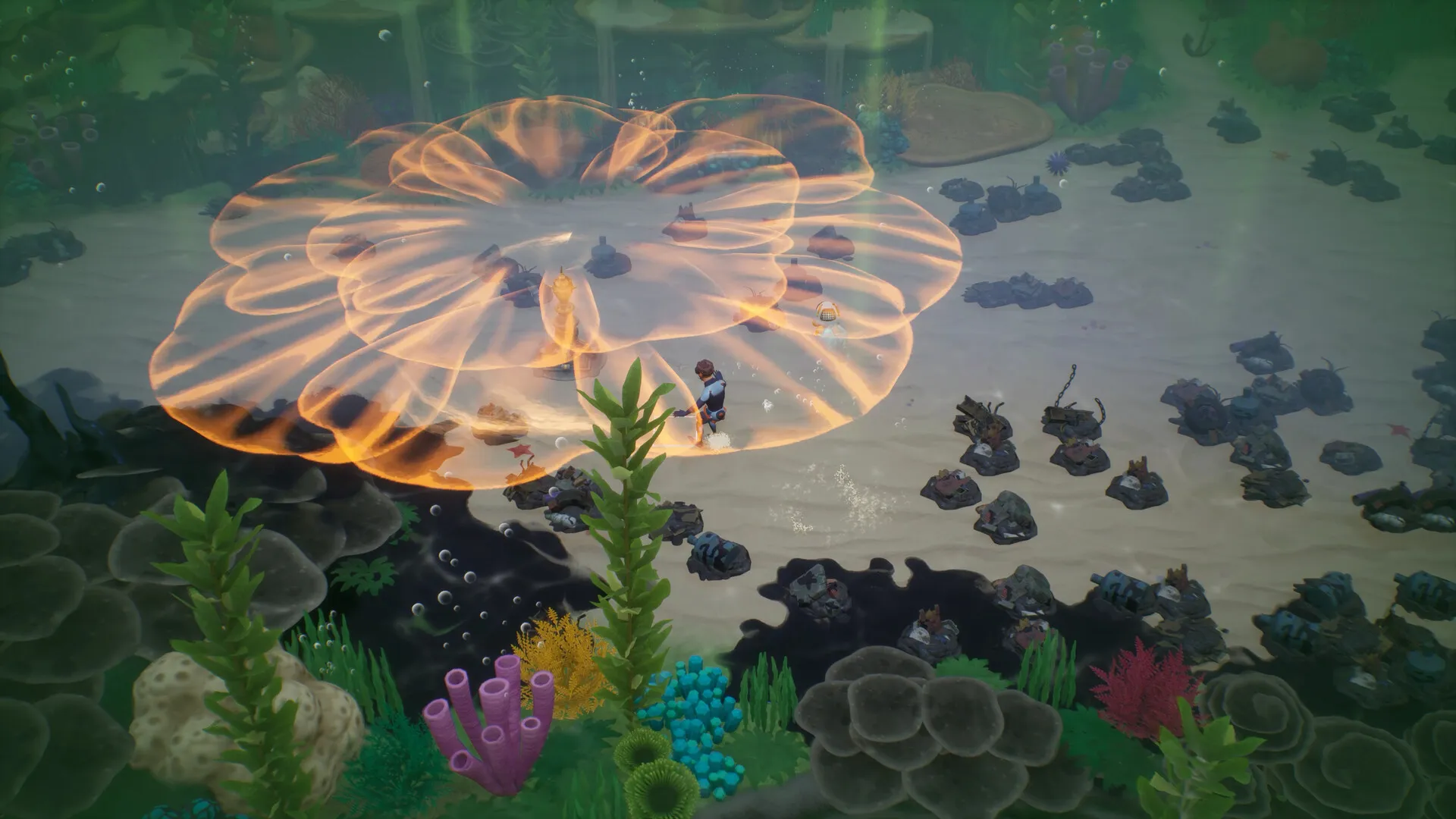
Diving mechanics allow players to remove trash and revitalize underwater ecosystems.
These tasks are not cosmetic achievements.
Unlock-based restoration
Clearing pollution unlocks new marine species, crafting materials, and exploration zones.
Environmental repair directly expands mechanical opportunity.
3. Coral Activation and Biodiversity Systems
As underwater areas are cleansed, coral structures regenerate.
Fish populations diversify. Visual clarity improves.
Ecological feedback loop
The environment visibly responds to player intervention.
Progress becomes spatially observable rather than abstract.
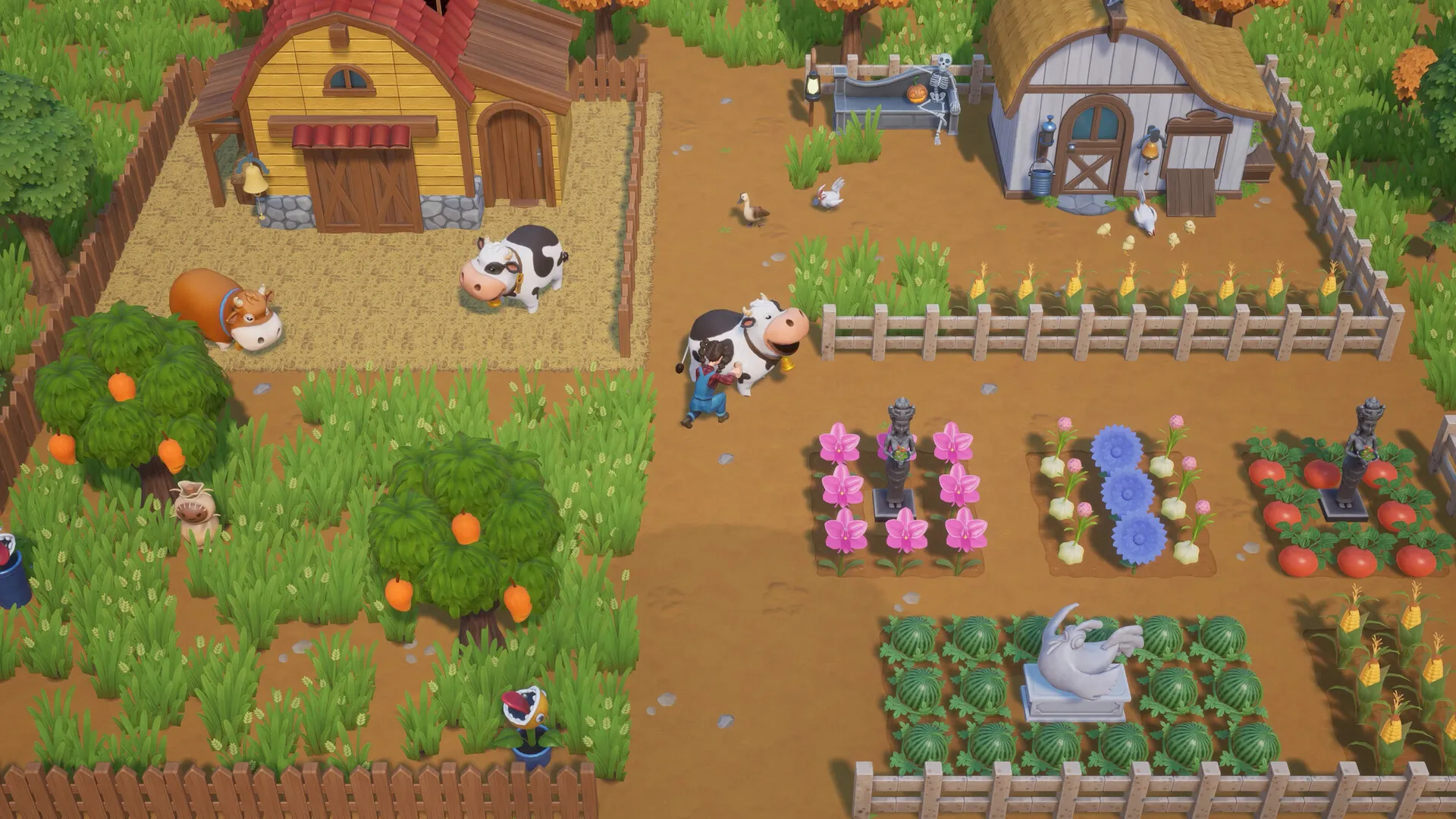
4. Farming Practices and Sustainable Framing
Crop cultivation operates similarly to genre standards, yet sustainability themes persist.
Composting, crop rotation awareness, and organic framing reinforce ecological messaging.
Ethical production subtext
While not mechanically punitive, the systems encourage mindful agriculture.
The tone reinforces responsibility without heavy-handed restriction.
5. Corporate Antagonism and Systemic Contrast
A corporate entity represents industrial expansion.
This presence introduces tension between rapid development and environmental balance.
Ideological framing
The player’s actions symbolically oppose extractive growth models.
Restoration becomes a counter-narrative to exploitation.
6. Community Integration Through Restoration
NPC relationships deepen as environmental milestones are achieved.
Festivals and events reflect ecological improvement.
Shared recovery
The island evolves socially alongside environmental repair.
Progress feels communal rather than individualistic.
7. Mining and Resource Extraction Boundaries
Mining exists but does not dominate the economy.
Extraction remains limited and narratively contained.
Controlled industrialization
The game avoids glorifying unchecked resource exploitation.
Balance remains central.
8. Visual Design as Reinforcement Mechanism
Environmental transformation is gradual and visible.
Murky waters turn clear. Coral glows. Marine life returns.
Aesthetic validation
Players see tangible evidence of repair.
Visual improvement reinforces motivation.

9. Late-Game Stability Without Environmental Abandonment
As income stabilizes, ecological systems remain relevant.
Ocean health continues to matter for biodiversity and crafting.
Persistent integration
Sustainability is not an early-game gimmick.
It remains structurally embedded throughout progression.
10. Why Restoration Must Remain Central
If ecological repair were optional, it would become thematic decoration.
Coral Island avoids this by binding environmental health to expansion.
By ensuring that restoration unlocks content and strengthens the community, the game preserves thematic consistency. Farming prosperity and ecological balance operate as mutually reinforcing systems.
Conclusion
Coral Island distinguishes itself within the farming simulation genre by making environmental restoration a core progression pathway. Through ocean cleanup, coral regeneration, and community evolution, sustainability becomes mechanically consequential rather than symbolic. Farming success and ecological repair intertwine, ensuring that advancement reflects stewardship instead of extraction.
By aligning gameplay rewards with environmental responsibility, Coral Island offers a cohesive design model where prosperity depends on preservation. The island thrives not through unchecked growth, but through balanced recovery—demonstrating that ecological systems can function as structural pillars rather than narrative decoration.