Nova Lands Tips & Guide: Essential Strategies for Exploration, Automation, Resource Management, and Base Building

Nova Lands is a colorful open-world adventure that combines exploration, resource gathering, factory automation, and base building. Players travel across islands, collect materials, discover new technologies, construct production systems, and gradually expand their operations into a much larger industrial network.
At the beginning, the world feels simple. You gather resources by hand, craft basic items, and establish a small base. As you progress, however, the number of materials, machines, production chains, and locations increases. Tasks that once seemed straightforward can become difficult to manage without a clear plan.
The secret to success is learning how to turn a small collection of resources into a sustainable automated economy. Instead of spending all your time gathering materials manually, you can build systems that produce essential goods while you explore new regions and unlock additional technologies.
Whether you enjoy designing efficient factories, discovering unfamiliar islands, or building a self-sufficient base, these Nova Lands tips will help you make steady progress and avoid common beginner mistakes.
1. Understand the Core Gameplay Loop
Nova Lands revolves around a repeating cycle of exploration, resource collection, crafting, automation, and expansion. Each activity supports the next, so understanding how they connect is essential for efficient progression.
Early on, manual gathering is useful because you need materials to establish your first production systems. Later, automated production becomes increasingly important, allowing you to obtain resources without personally performing every task.
Start With the Essentials
Your first priority should be learning how to collect common materials, craft basic items, and build the structures needed to support further development.
Rather than unlocking everything immediately, focus on technologies that directly improve your ability to gather resources or produce useful items.
A practical early-game approach includes:
- Collect basic materials whenever you encounter them.
- Learn the crafting requirements for essential structures.
- Build a compact starting base.
- Unlock technologies that support your next objective.
- Begin automating frequently used resources as soon as practical.
This creates a stable foundation for future expansion.
Think in Production Chains
Many crafting goals require multiple resources or intermediate products. A finished item may depend on materials that must first be collected, processed, or manufactured.
Before constructing a new machine, identify what it needs and what it produces. Then work backward from your intended goal to determine which resources and production steps are missing.
Thinking in production chains helps prevent wasted materials and makes complicated projects easier to organize.
2. Gather Resources Efficiently
Resource gathering is unavoidable during the early stages, and it remains important even after automation becomes available. Different materials support different technologies, machines, and construction projects, so learning how to gather them efficiently can save considerable time.
Prioritize Materials You Actually Need
It is tempting to collect everything you encounter, but carrying large quantities of materials without a clear purpose can make inventory management difficult.
Before a gathering trip, decide which resources are most important for your current project. If you are building a production machine, collect the materials required for that machine first.
You can still gather extra resources along the way, especially when they are easy to obtain, but avoid allowing optional collection to distract you from your main objective.
Explore Resource-Rich Areas
Different islands and regions offer different opportunities. When you reach a new area, pay attention to the materials available and whether they can support technologies you have not yet unlocked.
If a resource is scarce near your starting base, exploring another region may be more productive than repeatedly gathering the same limited supply.
Keep track of where useful materials are found so that future trips have a clear purpose.
Gather With Future Projects in Mind
Some resources are easy to obtain but frequently required. Others may be needed in larger quantities when you begin expanding your factories.
When you discover a material used in several crafting recipes, consider collecting a modest reserve. This reduces interruptions when you need to build additional machines or upgrade your production network.
However, avoid hoarding every resource indefinitely. Your stockpile should support your plans, not become an obstacle to spending materials on useful progress.

3. Build a Compact and Organized Base
Your base is the center of your production network. A well-organized layout makes it easier to understand how materials move between machines and identify where additional production capacity is needed.
A sprawling base may look impressive, but unnecessary distance between connected structures can make management more complicated than it needs to be.
Separate Production by Purpose
Consider grouping structures according to their roles. For example, you might keep basic material production near storage, place related processing machines together, and reserve another area for more advanced manufacturing.
This makes it easier to locate specific structures when you need to adjust a production chain.
The exact layout is less important than consistency. Choose an arrangement that you can understand at a glance and expand without completely rebuilding your base.
Leave Space for Expansion
One common mistake is filling every available space with early-game structures. Later technologies may require more machines, additional processing stages, or greater production capacity.
Leave room for future buildings and avoid placing important structures where they will obstruct expansion.
Useful planning habits include:
- Group machines that belong to the same production chain.
- Keep frequently used structures easy to reach.
- Leave open areas for additional machines.
- Avoid rebuilding the entire base for every new technology.
- Review the layout whenever a production chain becomes difficult to manage.
Optimize for Function Before Appearance
A visually attractive base is rewarding, but efficiency should come first while your resources are limited.
Build the structures that support your current goals, then improve the layout when you have a more stable economy. You can always make the base more attractive after its core systems are working reliably.
4. Automate Production as Early as Practical
Automation is one of Nova Lands' most important mechanics. It allows your production systems to perform repetitive work while you focus on exploration, research, and expansion.
The goal is not to automate every activity immediately. Instead, automate the tasks that consume the most time or repeatedly interrupt your progress.
Identify Repetitive Tasks
Pay attention to the materials you gather or manufacture most often. If you repeatedly stop exploring to collect the same basic resource, that resource is a strong candidate for automation.
Start with simple production chains that use readily available materials. Once these are operating reliably, expand into more complicated manufacturing.
This approach allows automation to support your progress without demanding too many resources at once.
Understand Inputs and Outputs
Every production system depends on having the right materials available. A machine may be capable of manufacturing an item, but it cannot operate effectively if the required inputs are missing.
When a production chain is not working as expected, check each stage rather than immediately constructing more machines.
Ask yourself:
- Is the required input material available?
- Is the previous production stage functioning?
- Is the output being directed where it is needed?
- Does the chain require an additional processing step?
- Is production capacity sufficient for the intended goal?
Troubleshooting the actual bottleneck is usually more efficient than expanding blindly.
Automate in Stages
Begin with one reliable chain, then add complexity gradually. If you attempt to automate several advanced products at once, you may consume the same limited resources across too many projects.
A staged approach helps you understand each system and ensures that new production depends on a stable supply of earlier materials.
5. Manage Inventory and Production Bottlenecks
As your base grows, resource management becomes more complicated. A production line may require several ingredients, and shortages in one area can affect everything downstream.
Keeping track of inventory and production capacity prevents unnecessary delays.
Maintain a Reserve of Essential Materials
Some resources are used so frequently that running out of them can halt multiple projects. Identify these materials and keep a reasonable reserve available.
Your reserve should reflect your current stage of progression. A small base may require only modest quantities, while a larger factory may need significantly more material to support ongoing construction.
Do not allow the reserve to become an excuse for avoiding investment. If a resource is consistently running low, improving its production may be better than repeatedly collecting it manually.
Find the Actual Bottleneck
Suppose a finished product is being produced too slowly. The problem may not be the final machine. An earlier stage might be unable to supply enough material, or the production chain may depend on a resource that is difficult to obtain.
Trace the process from the raw materials to the finished product and identify the stage that limits the entire chain.
Once you find the bottleneck, address it directly. Increasing output at a stage that already produces enough will not solve a shortage elsewhere.
Avoid Overproduction
Automation makes it easy to accumulate large quantities of items you do not immediately need. Producing more than necessary can tie up resources that would be better spent on new technologies or construction.
Before expanding a production line, consider the purpose of its output. If your stockpile already contains enough material for the next several projects, redirect your attention toward a more urgent requirement.

6. Unlock Technologies With a Clear Progression Plan
Technology progression expands what you can build and manufacture. New unlocks can provide access to better production methods, additional resources, and more ambitious projects.
However, pursuing every available technology at once can make progression inefficient. Research and construction should support a specific goal rather than become a collection of unrelated tasks.
Work Backward From Your Objective
Choose a useful structure, item, or capability you want to unlock. Then determine which technologies and materials are required to reach it.
This creates a straightforward progression path and helps you avoid spending resources on upgrades that do not support your immediate needs.
For example, if your goal requires a new manufactured material, focus on unlocking and establishing the production stages that create it before investing heavily in unrelated projects.
Balance Short-Term and Long-Term Benefits
Some technologies solve immediate problems, while others provide capabilities that become more valuable later.
An unlock that improves basic resource production may seem less exciting than a technology for advanced manufacturing, but it can make every subsequent project easier.
Evaluate technologies based on how much they improve your overall production and exploration capabilities, not simply on how advanced they appear.
Avoid Expanding Too Quickly
Every new technology can introduce additional material requirements and production responsibilities. Unlocking several systems in rapid succession may leave you with a long list of unfinished construction projects.
Complete important foundations before moving on. A reliable basic economy is more valuable than an impressive collection of technologies that you cannot yet support.
7. Explore Islands and Discover New Opportunities
Exploration is essential to Nova Lands because new areas can provide resources, challenges, and opportunities that are unavailable or limited near your starting location.
Travel also helps you discover how the world is structured and which regions are worth revisiting for particular materials.
Prepare Before Traveling
Before leaving your main base, check your current objectives and inventory. Make sure you have the resources needed for the next task and enough room to collect useful discoveries.
If your destination is unfamiliar, focus on exploration first rather than attempting to complete every possible objective during the same trip.
Learning the area can help you plan a more productive return visit.
Make Each Trip Count
When traveling to gather a particular resource, collect enough to support more than one immediate task when practical. This reduces the number of repeated journeys you need to make.
You can also combine exploration with progression by looking for materials that support upcoming technologies or construction projects.
However, avoid collecting so much that you lose track of your main goal or delay an important objective.
Expand When Your Base Is Ready
New areas are most useful when you have a clear reason to visit them. If your current production systems cannot support the next stage of expansion, strengthening your existing base may be more productive than exploring farther away.
A good rhythm is to improve your production, explore for new opportunities, and then return to convert those discoveries into useful progress.
8. Approach Combat and Hostile Encounters Carefully
Although automation and construction are major parts of Nova Lands, exploration can also involve hostile creatures and dangerous situations. Being prepared makes it easier to move through unfamiliar areas without repeatedly interrupting your progress.
Combat preparation does not need to dominate your entire playthrough, but it should not be ignored when you plan to explore more challenging locations.
Learn Enemy Behavior
When encountering an unfamiliar enemy, observe its movements and attacks before committing to an aggressive approach. Understanding the encounter can help you avoid unnecessary damage and recognize opportunities to respond safely.
If a fight proves difficult, consider whether your equipment, preparation, or approach needs improvement instead of repeating the same strategy without changes.
Prepare for Longer Exploration Trips
Bring the supplies and equipment appropriate for the areas you intend to visit. Avoid starting a demanding journey without considering the potential cost of an encounter or the resources you may need along the way.
If you discover that a region is beyond your current capabilities, return later after improving your equipment or progression.
Balance Combat With Factory Development
Combat upgrades and factory construction can compete for the same resources. Decide which investment offers the greatest benefit for your next objective.
If you are struggling to reach a new region, improving combat readiness may be worthwhile. If exploration is progressing smoothly but your production is inefficient, improving automation may provide a better return.
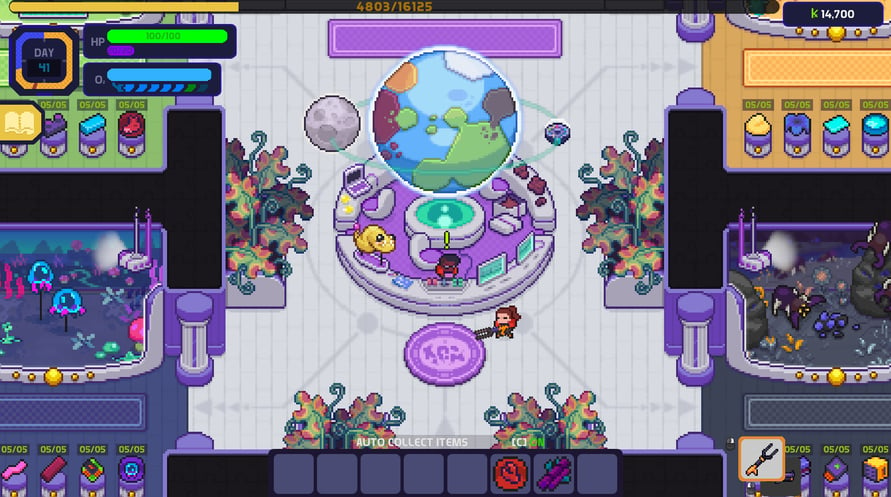
9. Use Smart Expansion to Build a Stronger Industrial Network
Once your basic production systems are stable, you can begin expanding into a more complex network of machines and resource chains. This is where planning becomes especially important.
Large production systems can save substantial time, but they also introduce more dependencies and make it harder to identify problems when something stops working.
Expand One Production Chain at a Time
Before adding a new manufacturing project, check whether your current economy can support its material requirements.
Build the necessary stages in a logical order, beginning with the resources that are hardest to supply. Confirm that each stage works before connecting it to a larger network.
This approach reduces wasted construction and makes troubleshooting easier.
Improve Existing Systems Before Duplicating Them
When production is slow, your first instinct might be to build another complete production line. Sometimes that is the correct solution, but other times a single inefficient stage is responsible for the delay.
Review the existing system first. Improving the weakest stage can increase output without requiring a complete duplicate.
Only expand capacity when the additional production will actually be useful.
Keep Your Factory Understandable
As the number of machines grows, organization becomes increasingly important. A production network that you can easily understand is easier to improve than one built through disconnected additions.
Keep related structures together, leave room for future upgrades, and periodically remove unnecessary complexity from your plans.
The best factory is not necessarily the largest one. It is the one that reliably produces the materials you need for your next goals.
10. Avoid Common Beginner Mistakes and Plan for Long-Term Progress
Nova Lands rewards experimentation, but certain habits can slow down progression. Recognizing these mistakes early helps you spend more time building and exploring instead of repeatedly correcting preventable problems.
Do Not Automate Everything Immediately
Automation is powerful, but complicated production lines can require substantial resources. Trying to automate every item before establishing a reliable foundation can delay more important upgrades.
Start with repetitive tasks and essential materials. Expand when your existing systems can support additional complexity.
Do Not Ignore Your Existing Production
It is easy to become excited about new islands, machines, and technologies while forgetting to maintain the systems that support them.
Check whether essential resources are still being produced and whether your current stockpile is sufficient for planned construction.
A small amount of maintenance can prevent major interruptions later.
Avoid Building Without a Clear Purpose
Every machine should support a specific need, whether that is producing a required ingredient, improving resource availability, or unlocking further progression.
Before starting a large construction project, determine what it will accomplish and which materials it requires. This makes your decisions more deliberate and reduces the number of abandoned projects.
Set Manageable Goals
Instead of trying to unlock every technology or explore every location immediately, divide your progress into smaller milestones.
Useful goals include:
- Establishing a dependable source of basic materials.
- Automating one important production chain.
- Unlocking a technology that supports your next objective.
- Exploring a new region for specific resources.
- Improving a factory bottleneck.
- Expanding your base when your current systems are ready.
Completing these milestones creates steady progress while preserving the freedom to experiment.
Keep Experimenting
There is rarely only one way to organize a successful base. You may discover that a different layout, production order, or exploration route works better for your playstyle.
Treat inefficient systems as opportunities to learn. Review what went wrong, adjust the design, and apply that knowledge to future projects.
Conclusion
Nova Lands combines exploration, resource gathering, automation, and base building into a progression system that rewards careful planning. Beginners can make the strongest start by learning the basic gameplay loop, gathering essential materials, organizing a compact base, and automating repetitive tasks as soon as practical.
As your operations expand, focus on maintaining useful resource reserves, identifying production bottlenecks, and unlocking technologies that support clear objectives. Explore new islands when your base is ready, prepare for dangerous encounters, and expand your factory one reliable production chain at a time.
Most importantly, avoid building complexity for its own sake. A well-organized base that consistently produces what you need will help you progress more smoothly than an oversized factory full of unfinished systems. With thoughtful resource management and gradual automation, you can turn a small settlement into a productive industrial network and discover everything Nova Lands has to offer.
Description (160 characters): Master Nova Lands with beginner tips for resource gathering, automation, factory building, exploration, combat preparation, and efficient technology progression.